

A Warning regarding Liquor Stars
This post server as a warning to consumers concerning purchases at liquorstars.com

If you’ve spent any time exploring American whiskey, you’ve probably noticed that discussions eventually revolve around grain. Bourbon, rye, and wheated whiskeys are often spoken about as if they’re entirely different categories—sometimes even opposing camps. In reality, they’re closely related expressions built on the same foundation, separated primarily by which grain takes the lead and how that grain shapes the final experience.
This expanded deep dive keeps the same core ideas intact while going further—adding context, nuance, and practical insight into how bourbon, rye, and wheated whiskeys differ, overlap, and ultimately serve different palates and occasions.
Before pulling these styles apart, it’s important to recognize what they share. Bourbon, rye, and wheated whiskeys are siblings, not strangers.
All three:
From a production standpoint, the equipment, processes, and even barrel warehouses may be identical. What changes is what the spirit is built from, and that difference cascades through aroma, flavor, texture, and finish.
This is why two whiskeys made at the same distillery, aged in the same warehouse, and bottled at the same proof can taste dramatically different.
A mash bill is the grain recipe used to make whiskey. While most American whiskeys use multiple grains, one grain almost always dominates and defines the style.
That single substitution—corn vs rye vs wheat—may sound small, but it fundamentally alters how the whiskey behaves from fermentation through aging and into the glass.
Bourbon is built on corn, and corn is a forgiving, expressive grain. It ferments easily and produces a spirit that leans naturally toward sweetness and body.
Corn contributes:
Secondary grains are still important. Rye adds spice and tension. Wheat adds softness and approachability. Barley supports fermentation. But corn always defines bourbon’s baseline character.
Classic bourbon flavors tend to cluster around:
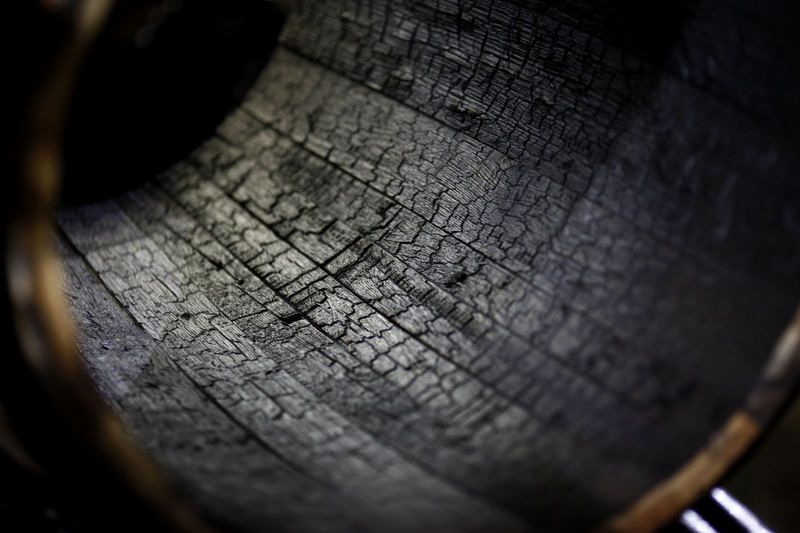
These flavors are amplified by new, charred oak barrels, which interact especially well with corn-based spirit. The result is a whiskey that feels familiar, warming, and deeply satisfying.
Because bourbon must be aged in new charred oak barrels, it extracts wood influence quickly. This leads to:
Some bourbons shine young and vibrant, while others benefit from extended aging to balance oak with sweetness.
Bourbon is often the most accessible style of American whiskey. It appeals to:
It also performs exceptionally well both neat and in cocktails, making it a versatile cornerstone of many home bars.
Rye is assertive and unapologetic. Even in small amounts, rye changes a whiskey’s personality. When rye takes center stage, the result is sharper, drier, and more angular.
Rye contributes:
Where bourbon tends to feel round and enveloping, rye feels direct and energetic.
Rye whiskey often expresses flavors such as:
Sweetness takes a back seat, replaced by structure and spice.
Rye interacts with oak differently than corn. Barrel influence tends to highlight:
This means rye can feel mature at younger ages, but also risks becoming overly woody if aged too long without balance.
Rye appeals to drinkers who:
If bourbon feels comforting, rye feels invigorating.
Wheated whiskey is often misunderstood as “sweet,” but wheat’s true contribution is softness. Wheat doesn’t shout—it smooths.
Wheat contributes:
Most wheated whiskeys are still corn-forward; wheat simply replaces rye as the secondary grain.
Wheated whiskeys often present:
Compared to rye, wheated whiskey feels relaxed and composed. Compared to bourbon with rye, it feels less edgy and more flowing.
Wheat softens oak extraction, often resulting in:
This makes wheated whiskeys particularly appealing at higher proofs or longer aging periods.
Wheated whiskey is ideal for:
Its subtlety rewards attention rather than demanding it.
| Style | Sweetness | Spice | Body | Finish |
|---|---|---|---|---|
| Bourbon | High | Medium | Full | Warm, oaky |
| Rye | Low–Medium | High | Lean | Dry, spicy |
| Wheat | Medium | Low | Soft, round | Gentle, clean |
These are tendencies, not rules—but they’re reliable starting points.
The same barrel can yield different results depending on the grain inside it:
Understanding this interaction explains why mash bill matters as much as age.
Higher proof affects each style differently:
This is why high-proof wheated whiskeys are frequently described as deceptively easy to drink.
Classic cocktail recipes specify a style for a reason—substitutions noticeably change balance.
Your preferred drinking method often aligns naturally with grain preference.
Instead of asking which style is “better,” ask:
Grain-forward thinking turns bottle selection into an informed choice rather than a gamble.
Bourbon, rye, and wheated whiskeys are variations on a shared theme, each shaped by a single dominant grain. Corn brings sweetness and weight, rye brings spice and energy, and wheat brings softness and balance.
Understanding those differences transforms whiskey exploration from guesswork into intention—and makes every pour more rewarding.
This post server as a warning to consumers concerning purchases at liquorstars.com
This guide takes a deeper, more deliberate look at the relationship between whiskey and bourbon, moving beyond quick definitions into why those definitions exist and how they shape what ends up in your glass.
Explaining the key differences between Scotch and Irish whiskey—from distillation methods and peat usage to regional flavor profiles—while guiding beginners toward finding their perfect pour.